AgMIP Demand-Scoping Study in Sub-Saharan Africa
AgMIP Demand-Scoping Study in Sub-Saharan Africa
Synergos is partnering with the Agricultural Model Intercomparison and Improvement Project (AgMIP) and the International Food Policy Research Institute (IFPRI) on the AgMIP Demand-Scoping Study in Sub-Saharan Africa.
Project partners will work with governmental stakeholders to co-develop a framework for applying information from climate, crop, and economic models to inform various policy instruments, such as National Adaptation Plans, National Agricultural Investment Plans, Nationally Determined Contributions, and Biennial Transparency Reports.
The project will also help build capacity in governments to advance evidence-based investments in mitigation and adaptation. While the project will retain a focus on Ghana and Senegal, the outputs will discuss how the findings apply to countries across sub-Saharan Africa and beyond.
Staff of Synergos Nigeria and Synergos Ethiopia participate in this project, and have shared our approach to improving policymaking and government capacity in agriculture in their countries. These efforts include analysis of the policy processes and identification of entry points for strengthening the evidence base for policy development. We also promote coordination between stakeholders in the agricultural sector, including government and business, civil society, philanthropy, and farmers’ organizations. The result is innovative solutions to urgent challenges; policy implementation for increased public and private sector investment and job creation; and monitoring and evaluation.
Outputs of the AgMIP Demand-Scoping Study in Sub-Saharan Africa to-date include:
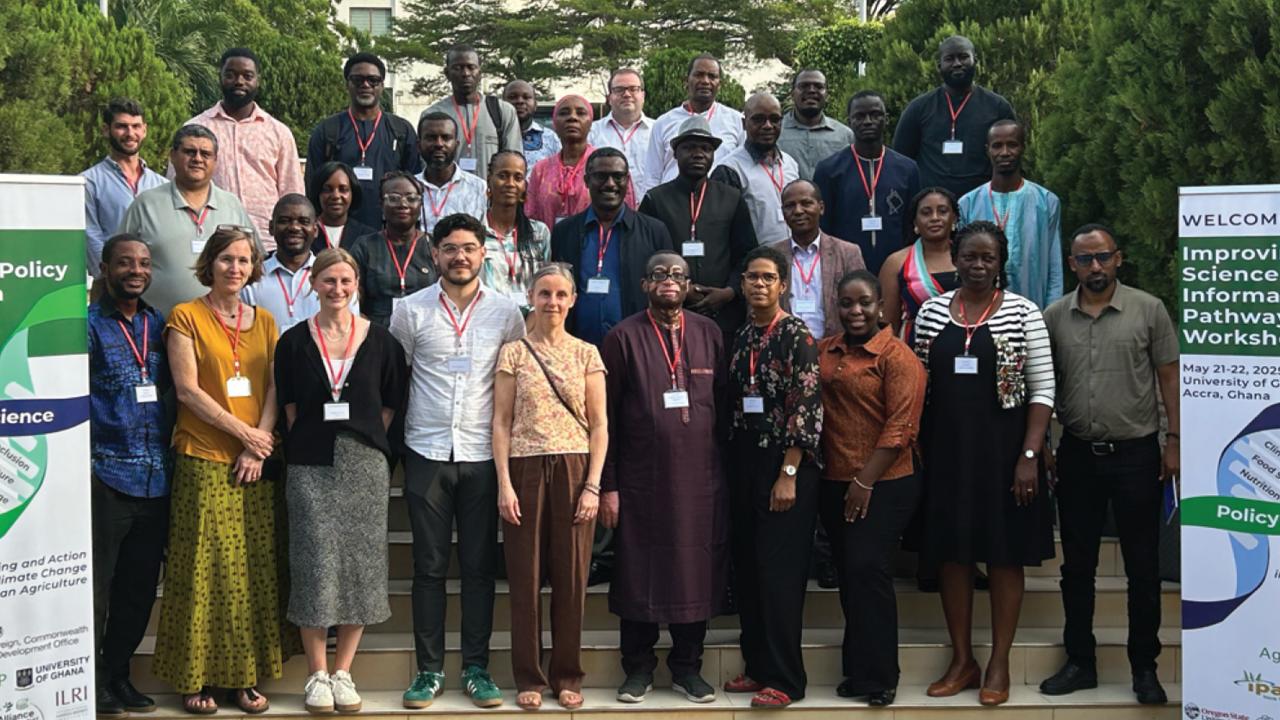
- Workshop Report: Improving Science-to-Policy Information Pathways to Support Planning and Action on Climate Change in African Agriculture
- Policy Brief (Ghana): AgMIP Policy Brief: Advancing Climate Resilient Agriculture in Ghana
- Policy Brief (Senegal): Advancing Climate Resilience for Agriculture in Senegal: AgMIP-Supported Policy and Action
To learn more, visit the project website.